
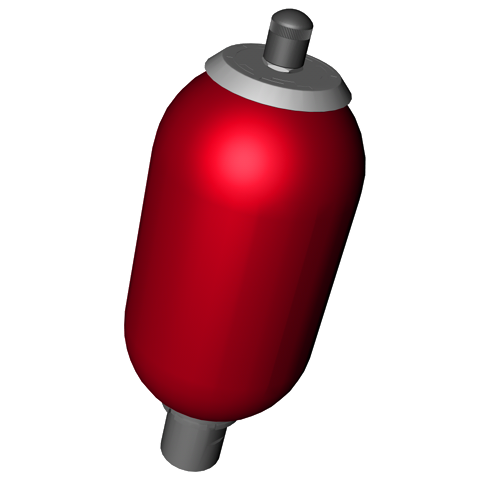
Hydraulic accumulators
ROBUST AND VERSATILE: Wherever hydraulic tasks need to be performed, HYDAC hydraulic accumulators can help. They are versatile, make your machine more convenient to use, secure your hydraulic system and are used to increase the energy efficiency of hydraulic systems and for many other tasks.
HYDRAULICS ARE YOUR HOME: The know-how of our hydraulic specialists extends to all accumulator types, such as bladder accumulators, piston accumulators or diaphragm accumulators and metal bellows accumulators. We will gladly assist you in selecting the right design and in determining the suitable accumulator model. The extensive range of accessories makes proper installation, protection on the gas and fluid side, and maintenance easier.
HOLISTIC CARE THROUGH GLOBAL EXPERTISE ON-SITE:
• Selection of the correct accumulator design, no matter whether a simple accumulator or hydraulic damper
• Determine the type of accumulator that is right for your application
• Tools and simulation programmes for computational support
• Original accessories as well as appropriate safety and monitoring devices from a single source
• Maintenance and repair through the international HYDAC Service and local specialists
• The global HYDAC network and our expertise on site
Product Search
Filter selection
Reset filter
Helpful online tools for this category



Downloads for this category
CAD data can’t be found at the product category level. Instead, it can be found directly at an individual product level.
Media

Accumulator Technology.
Product brochure
EN
(11.42 MB)

Accumulator Technology. Product Catalogue.
Product brochure
EN
(32.38 MB)
Accumulators Stations
Product brochure
EN
(2.38 MB)
Piston accumulator stations in the hydropower industry
Product brochure
EN
(1.65 MB)
Metal Bellows Accumulators for Heavy Diesel Engines
Product brochure
EN
(5.07 MB)
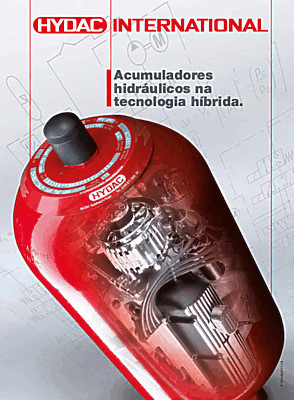
Hydraulic Accumulators in Hybrid Technology.
Product brochure
EN
(2.6 MB)
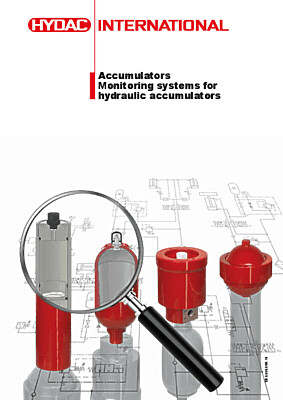
Monitoring systems for hydraulic accumulators
Product brochure
EN
(1.43 MB)
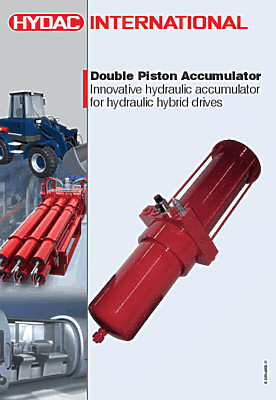
Double Piston Accumulator - Innovative hydraulic accumulator forhydraulic hybrid drives
Product brochure
EN
(1.38 MB)
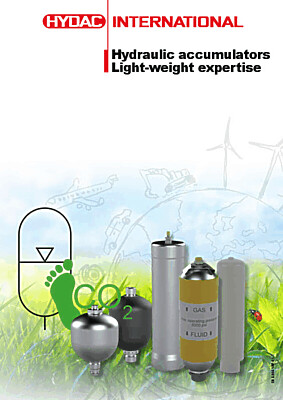
Weight-Reduced Hydraulic Accumulators
Product brochure
EN
(1.95 MB)
ST-Operating Instructions
Operating/maintenance instructions
EN
(1.1 MB)

Online-Form Accumulator
Product information
EN
(0 MB)

Online-Form Pulsation damping
Product information
EN
(0 MB)

Online-Form Silencer
Product information
EN
(0 MB)

Online-Form Shock absorber
Product information
EN
(0 MB)

Safety Enquiry Form
Product information
EN
(0.24 MB)

Online-Form Metal bellows accumulator
Product information
EN
(0 MB)
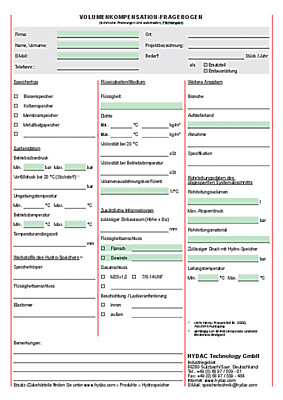
Online-Form Volume compensation
Product information
EN
(0 MB)